
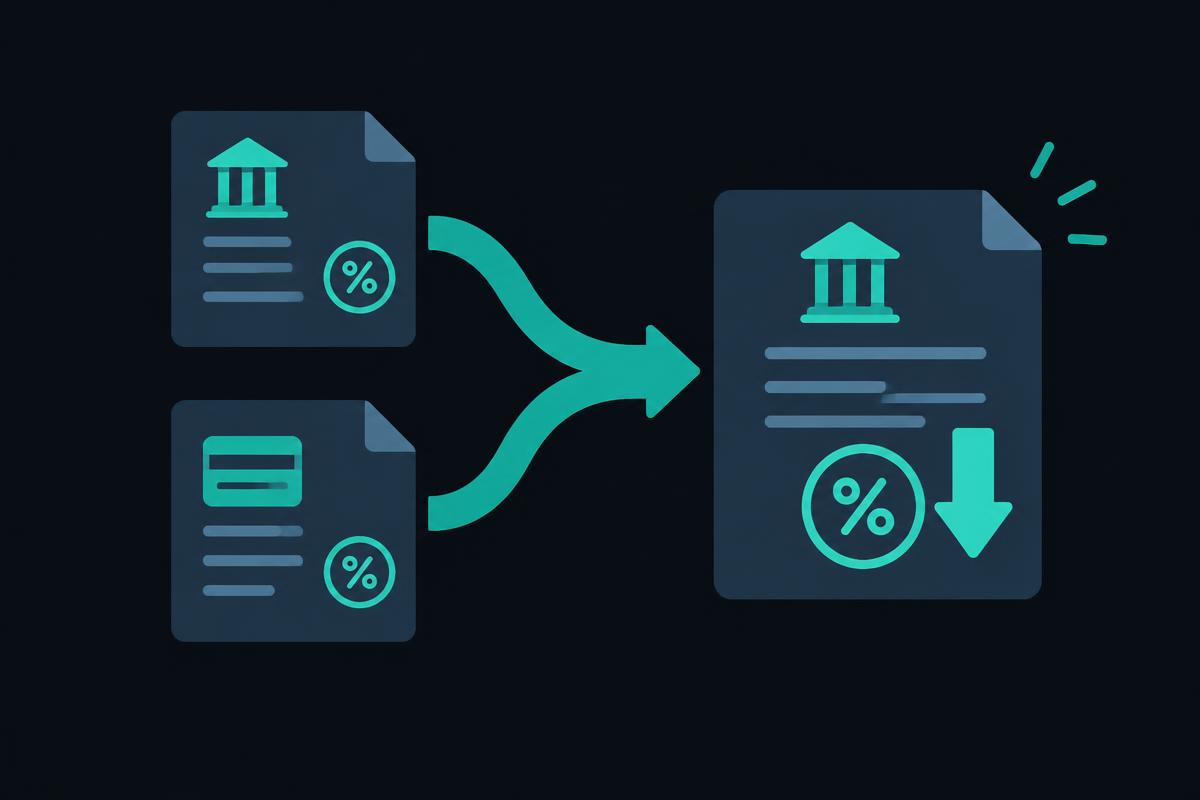
Smart Ways to Refinance Debt in 2026
Refinancing is one of the most powerful tools for reducing your debt burden — but it's not always the right move. Done correctly, refinancing can save you thousands in interest, lower your monthly payments, and accelerate your path to debt freedom. Done wrong, it can cost you money and extend your debt timeline.
This guide walks you through when, how, and whether to refinance. Refinancing works best when paired with strong money habits and clear financial goals — so you don't just save money, you deploy it wisely. Here's when, how, and whether to refinance each type of debt in 2026.
What Is Refinancing?
Refinancing means replacing an existing loan with a new one — ideally at better terms. The goals are usually:
- Lower interest rate → pay less over time
- Lower monthly payment → improve cash flow
- Shorter loan term → pay off debt faster
- Consolidate multiple debts → simplify payments
Refinancing vs. Debt Consolidation
| Refinancing | Debt Consolidation |
|---|---|
| Replace one loan with a new one | Combine multiple debts into one |
| Same type of debt (e.g., mortgage → new mortgage) | Can combine different types |
| Focus: better terms on existing debt | Focus: simplification + lower rate |
Both can save you money when used correctly.
When Does Refinancing Make Sense?
✅ Refinance When:
- Your credit score has improved significantly since the original loan
- Market interest rates have dropped below your current rate
- You have stable income to qualify for better terms
- The savings outweigh the refinancing costs (closing costs, fees)
- You plan to keep the loan long enough to break even
❌ Don't Refinance When:
- The fees exceed your potential savings
- You're extending the loan term significantly (paying more total interest)
- You'd lose valuable benefits (federal student loan protections)
- Your credit has worsened since the original loan
- You're close to paying off the current loan
The Break-Even Calculation
Break-even = Total refinancing costs ÷ Monthly savings
Example: $3,000 in closing costs ÷ $150/month savings = 20 months to break even.
If you'll keep the loan longer than the break-even period, refinancing makes sense.
Type 1: Mortgage Refinancing
Current 2026 Landscape
Mortgage rates in early 2026 range from 5.5–7.0% depending on credit and loan type. If you locked in a rate above 7% in 2023–2024, refinancing could save significantly.
Options
| Type | Best For |
|---|---|
| Rate-and-term refinance | Lowering your rate or shortening your term |
| Cash-out refinance | Accessing home equity for other uses |
| Streamline refinance (FHA/VA) | Simplified process, less paperwork |
Cost Considerations
- Closing costs: 2–5% of loan amount
- Appraisal: $300–600
- Title insurance: $500–1,500
- Origination fees: 0.5–1% of loan amount
Strategy: Refinance + Maintain Old Payment
If you refinance from a 7% to a 5.5% rate, keep making the same monthly payment you were making before. The difference goes directly to principal, shaving years off your mortgage.
Type 2: Student Loan Refinancing
Who Benefits Most
- Borrowers with private student loans at high rates
- Federal loan borrowers who don't need income-driven repayment or PSLF
- Graduates with improved credit and stable income
Typical Savings
Refinancing $40,000 in student loans from 7% to 4.5%:
- Saves $6,800 in interest over 10 years
- Reduces monthly payment by $57
⚠️ Federal Loan Warning
Refinancing federal loans into private loans permanently removes access to:
- Income-driven repayment plans (SAVE, PAYE, IBR)
- Public Service Loan Forgiveness
- Federal forbearance/deferment
For more on student loan strategies, read our student loan payoff guide.
Type 3: Credit Card Balance Transfers
How It Works
Transfer high-interest credit card balances to a new card with a 0% introductory APR (typically 12–21 months).
Best Balance Transfer Cards (2026 Features)
Look for:
- 0% intro APR for 15–21 months
- Low transfer fee (3% is standard; some offer 0%)
- No annual fee
The Critical Rule
Pay off the entire transferred balance before the intro period ends. After the promotional period, rates jump to 18–25%.
Math Example
$5,000 credit card balance at 22% APR:
- Without transfer: Paying $200/month takes 31 months, costs $1,175 in interest
- With 0% transfer: Paying $278/month for 18 months, costs $150 in transfer fees
- Savings: $1,025
Use Safe Spend to set up a payoff plan that ensures you clear the balance before the promotional rate expires.
Type 4: Personal Loan Consolidation
When It Works
If you have multiple high-interest debts (credit cards, medical bills, store financing), a personal loan can consolidate them into one lower-rate payment.
Typical Rates (2026)
| Credit Score | Personal Loan Rate |
|---|---|
| 720+ | 6–10% |
| 660–719 | 10–16% |
| 580–659 | 16–25% |
Benefits
- One monthly payment instead of many
- Fixed rate and term (predictable payoff date)
- Lower rate than credit cards (if credit is decent)
- Forced payoff timeline (3–7 years typically)
Pitfall: Don't Run Up New Debt
The biggest danger of consolidation: paying off credit cards with a personal loan, then running the credit cards back up. If you consolidate, freeze or cut the cards.
For broader debt payoff strategies, see our guide on paying off debt faster.
Type 5: Auto Loan Refinancing
When to Consider
- Your credit score has improved since you bought the car
- You're paying above 5% on the loan
- You have at least 12–18 months remaining on the loan
- The car isn't too old (most lenders won't refinance cars 7+ years old)
Savings Example
$20,000 auto loan, 48 months remaining:
- At 8%: $488/month, $3,445 total interest
- At 4%: $452/month, $1,687 total interest
- Savings: $1,758
Where to Refinance
- Credit unions: Often best rates
- Online lenders: Convenient comparison shopping
- Banks: Competitive if you're an existing customer
Step-by-Step Refinancing Process
Step 1: Know Your Numbers
- Current loan balances, rates, and remaining terms
- Your credit score (free from CreditKarma, your bank, or AnnualCreditReport.com)
- Your monthly budget (build one here)
Step 2: Shop Multiple Lenders
Get quotes from at least 3–5 lenders. Multiple inquiries for the same loan type within 14–45 days count as a single credit inquiry.
Step 3: Calculate True Savings
Compare total cost (interest + fees) of the new loan vs. remaining cost of the current loan. Don't just compare monthly payments.
Step 4: Read the Fine Print
- Prepayment penalties on the new loan?
- Variable vs. fixed rate?
- Origination or application fees?
- Impact on tax deductions (mortgage interest)?
Step 5: Execute and Track
Once refinanced, track your new payment schedule and debt payoff progress with Safe Spend. Seeing your balances drop faster is the best confirmation you made the right move.
Common Refinancing Mistakes
❌ Focusing Only on Monthly Payment
A lower payment with a longer term can cost more in total interest. Always compare total cost, not just monthly payment.
❌ Refinancing Too Often
Each refinance has costs. If you're refinancing every year, the fees may eat your savings.
❌ Extending Your Debt Timeline
Refinancing a 15-year mortgage into a new 30-year mortgage "saves" money monthly but costs far more over the life of the loan.
❌ Ignoring Your Credit Score First
Improve your credit score before applying for refinancing. A higher score means better rates.
❌ Not Reading Terms Carefully
Variable rates, balloon payments, and prepayment penalties can turn a "good deal" into a costly mistake.
Frequently Asked Questions
How much can I save by refinancing?
It depends on your current rate, new rate, and loan balance. A 2% rate reduction on a $30,000 loan typically saves $3,000–5,000 over the loan life. Use online calculators to model your specific scenario.
Does refinancing hurt my credit score?
Temporarily, yes — a hard inquiry drops your score 5–10 points. But if refinancing leads to lower utilization and consistent payments, your score recovers and often improves within a few months.
Can I refinance with bad credit?
Yes, but your options and rates will be limited. Consider improving your credit score first. Check our credit score guide for strategies.
Is debt consolidation the same as refinancing?
Not exactly. Refinancing replaces one loan with a new one. Debt consolidation combines multiple debts into a single loan. Both aim to reduce interest and simplify payments.
Should I refinance my mortgage in 2026?
If your current rate is 1%+ above current market rates and you plan to stay in your home for 3+ years, refinancing likely makes sense. Calculate your break-even point to be sure.
Your Action Plan
- List all your debts with balances, rates, and terms
- Check your credit score for free
- Identify refinancing candidates (debts with rates above market)
- Get quotes from multiple lenders (3–5 minimum)
- Calculate break-even points for each potential refinance
- Build a budget to manage your new payments
- Track payoff progress with Safe Spend
Smart refinancing isn't about getting a lower payment — it's about paying less total for the money you borrowed.