
How to Build a 6-Month Emergency Fund (Step-by-Step Plan for 2026)
Building a 6-month emergency fund is one of the most powerful financial decisions you can make in 2026. If your income suddenly stopped tomorrow, would you be able to cover rent, food, utilities, and essential bills without relying on debt? That question alone explains why learning how to build a 6-month emergency fund matters.
A properly structured emergency fund protects you from job loss, medical surprises, unexpected repairs, and economic instability. More importantly, it provides psychological stability. When your finances are protected, your decisions become strategic instead of reactive.
This guide explains exactly how to build a 6-month emergency fund step by step, using realistic timelines, practical savings strategies, and structured financial planning.
What Is a 6-Month Emergency Fund?
A 6-month emergency fund is savings equal to six months of essential living expenses. Essential expenses include rent or mortgage, utilities, groceries, transportation, insurance, and minimum debt payments. It does not include entertainment, vacations, or lifestyle upgrades.
The goal of building a 6-month emergency fund is simple: if income disappears temporarily, your financial life does not collapse.
In 2026, with rising costs and shifting job markets, six months of coverage offers stronger protection than the traditional three-month recommendation.
Step 1: Calculate Your 6-Month Emergency Fund Target
You cannot build a 6-month emergency fund without knowing your number. Start by identifying your survival expenses.
List only essentials:
- Housing
- Utilities
- Food
- Transport
- Insurance
- Minimum debt payments
If your essential monthly expenses total $2,500, your 6-month emergency fund target is $15,000. Multiply your true monthly baseline by six to determine your exact goal.
Clarity transforms the idea of building an emergency fund from abstract to measurable. For a detailed approach to calculating and categorizing your expenses, see our guide on how to build a budget that actually works in 2026.
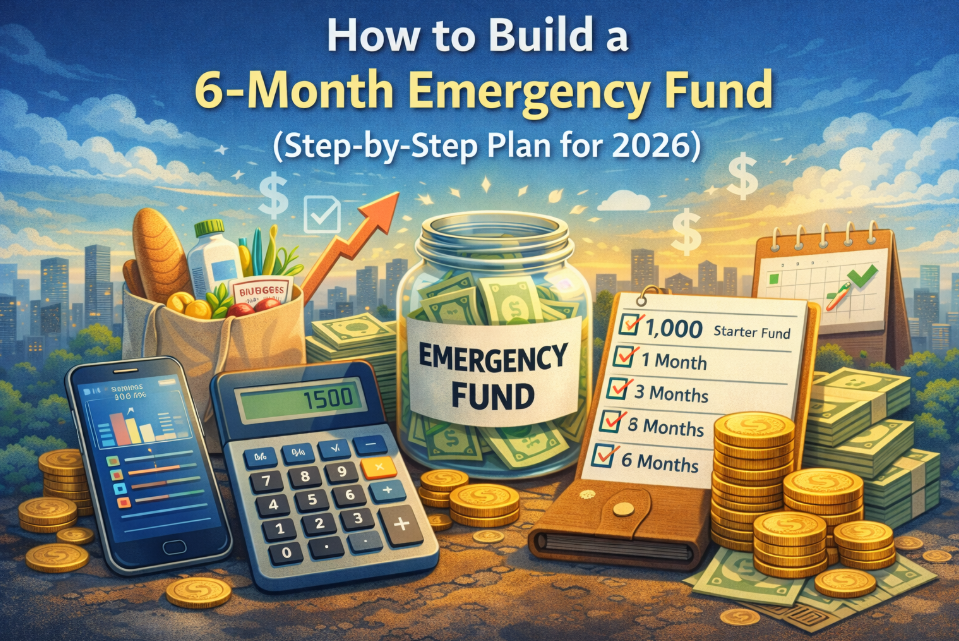
Step 2: Break the Goal Into Milestones
Saving six months of expenses can feel overwhelming. The key to successfully building a 6-month emergency fund is breaking it into stages.
Stage 1: $1,000 starter emergency fund
Stage 2: One month of expenses
Stage 3: Three months of expenses
Stage 4: Full 6-month emergency fund
Each milestone builds confidence and momentum. Instead of focusing on the full amount, focus on the next milestone. For a structured approach to breaking big financial targets into achievable steps, see our guide on financial goal setting for beginners.
Step 3: Open a Separate High-Yield Savings Account
Where you store your emergency savings matters. A separate high-yield savings account is ideal for a 6-month emergency fund because it keeps your money liquid, safe, and earning modest interest.
Keeping emergency funds separate from your daily spending account reduces temptation and protects your progress. Liquidity is essential. Your emergency fund must be accessible quickly but not so accessible that it becomes spending money.
Avoid placing your 6-month emergency fund in volatile investments like stocks or cryptocurrency. The purpose is stability, not growth.
Step 4: Automate Your Emergency Fund Contributions
Automation is one of the most effective ways to build a 6-month emergency fund consistently. Set up automatic transfers immediately after payday.
For example:
- 10% of income directly into savings
- $100 weekly automatic transfer
- Fixed monthly savings target
When contributions are automatic, saving becomes non-negotiable. Automation removes emotion and decision fatigue from the process of building an emergency fund. Building this kind of consistency is one of the good money habits that separates successful savers from everyone else.
Step 5: Choose a Realistic Timeline
Your timeline determines your monthly savings requirement.
If your target is $15,000:
12-month plan: Save $1,250 monthly
18-month plan: Save $834 monthly
24-month plan: Save $625 monthly
A longer timeline reduces pressure but requires discipline. Choose a plan you can sustain. Building a 6-month emergency fund is about consistency, not speed alone.
Step 6: Reduce Expenses Strategically
To accelerate your 6-month emergency fund, identify high-impact expense reductions.
Focus on:
- Canceling unused subscriptions
- Negotiating insurance or internet rates
- Cooking at home consistently
- Switching to lower-cost providers
- Refinancing high-interest debt
Even reducing expenses by $300 per month adds $3,600 annually to your emergency savings. Small structural changes dramatically improve your ability to build an emergency fund. For more strategies on cutting expenses without feeling restricted, check out our guide on how to stop overspending without feeling deprived.
Step 7: Increase Income to Build the Fund Faster
Expense reduction has limits. Income growth expands capacity.
Consider:
- Freelance or gig work
- Selling unused items
- Offering local services
- Weekend or overtime shifts
- Skill-based online income
Adding $500 per month toward your 6-month emergency fund reduces your timeline significantly. Combining income growth with expense reduction is the fastest strategy.
Step 8: Use Windfalls to Accelerate Your 6-Month Emergency Fund
Tax refunds, bonuses, commissions, or gifts should go directly into your emergency savings until your 6-month emergency fund is complete.
A $2,000 tax refund instantly covers nearly a full month of expenses for many households. Windfalls shorten timelines dramatically.
Delay lifestyle upgrades until your emergency savings goal is complete.
Step 9: Protect Your Emergency Fund From Misuse
A 6-month emergency fund is for genuine emergencies only:
- Job loss
- Medical emergencies
- Essential car repairs
- Critical home repairs
It is not for vacations, gadgets, or impulse purchases. Protecting the integrity of your emergency fund ensures it fulfills its purpose.
If you withdraw from it, rebuild immediately.
Step 10: Track Your Progress Monthly
Tracking progress reinforces motivation. Calculate how many months of coverage you currently have.
If you've saved $7,500 and your expenses are $2,500 monthly, you have three months of emergency coverage.
Seeing progress toward your 6-month emergency fund builds psychological momentum and keeps you consistent. Use Safe Spend to track your savings goals, monitor expenses, and visualize your progress toward financial stability.
Common Mistakes When Building a 6-Month Emergency Fund
Many people struggle not because they lack income, but because they lack structure.
Common mistakes include:
- Not calculating exact expenses
- Mixing emergency savings with spending money
- Investing emergency funds in volatile assets
- Saving aggressively for a few months then quitting
- Waiting for higher income before starting
Building a 6-month emergency fund requires steady, sustainable progress.
Where Should You Keep a 6-Month Emergency Fund?
The best place for an emergency fund is a high-yield savings account or money market account that offers liquidity and safety.
Avoid long-term investment vehicles or locked accounts. The purpose of a 6-month emergency fund is immediate access and capital preservation.
What If You're on a Low Income?
You can still build a 6-month emergency fund gradually.
Start with:
- $25 weekly contributions
- 5% automated income allocation
- Saving all windfalls
At $25 weekly, you save $1,300 per year. Growth may feel slow initially, but consistency compounds. For more practical savings strategies tailored to tight budgets, read our guide on how to save money fast on a low income.
The Psychological Benefits of Building a 6-Month Emergency Fund
Beyond financial protection, a fully funded emergency reserve reduces anxiety and improves decision-making. When your survival is covered, you can negotiate better job opportunities, leave unhealthy work environments, and manage life disruptions calmly.
The stability that comes from building a 6-month emergency fund extends beyond money. It creates confidence.
Frequently Asked Questions
How long does it take to build a 6-month emergency fund?
Timelines vary depending on savings rate. With disciplined saving and increased income, many people can complete their 6-month emergency fund within 12 to 24 months.
Should I pay off debt before building an emergency fund?
Build a starter emergency fund first, then balance debt repayment with continued savings growth. Eliminating all savings to pay debt increases financial risk.
Is six months really necessary?
While three months offers some protection, six months provides stronger security during prolonged job searches or economic downturns.
Final Thoughts
Learning how to build a 6-month emergency fund is not about restriction. It is about protection and preparation. By calculating your exact target, breaking it into milestones, automating contributions, reducing expenses, and increasing income strategically, you create lasting financial stability.
A 6-month emergency fund transforms uncertainty into security. Start today, even if the first step is small. Consistent action compounds into meaningful financial protection.