
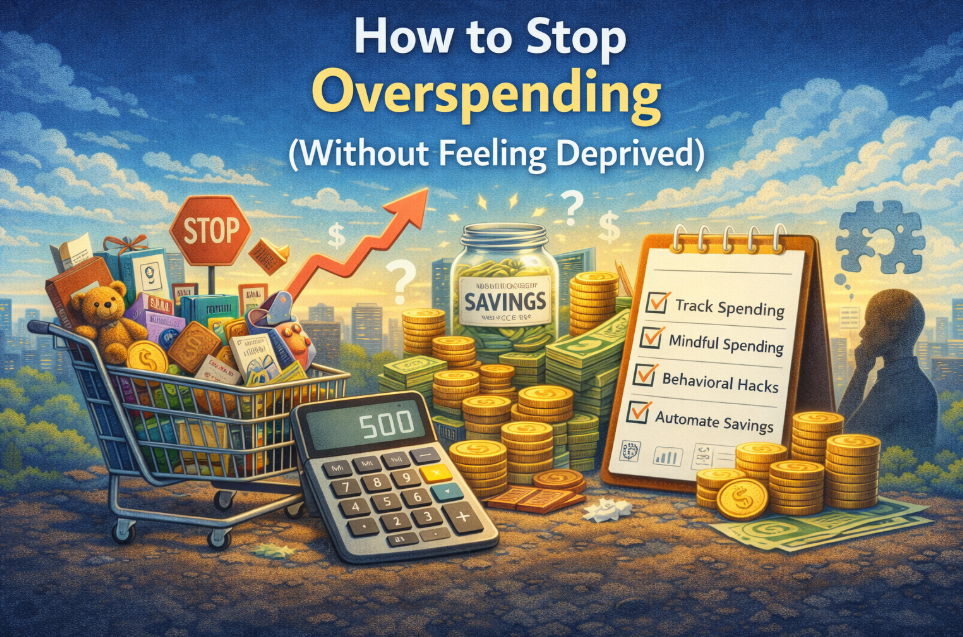
Overspending is one of the most common challenges for people trying to take control of their finances. Whether it's impulse buys, subscription creep, or emotional spending, the consequences are real: mounting debt, stalled savings, and financial stress. But the good news is that stopping overspending doesn't require depriving yourself of all enjoyment. With the right strategies, you can regain control over your money while still enjoying life.
This guide shows you how to stop overspending in 2026, using practical steps, behavioral hacks, and proven systems that reduce impulse spending without making your life feel restrictive.
What Is Overspending and Why It Happens
Overspending occurs when your expenditures consistently exceed your financial goals or income, leading to stress and a lack of financial control. The root causes are often psychological, not just numerical:
- Impulse buying: Quick purchases without thought about long-term impact.
- Emotional spending: Retail therapy triggered by stress, boredom, or celebration.
- Social comparison: Buying to keep up with friends, family, or trends.
- Instant gratification bias: Choosing immediate pleasure over future security.
Understanding why you overspend is the first step toward regaining control. Awareness allows you to create targeted solutions rather than blindly cutting expenses. Building lasting money habits is the key to making these changes permanent.
Step 1: Track Your Spending Before You Cut
Before you can stop overspending, you need to know where your money is going. Many people fail because they try to curb spending without a clear picture of their habits.
Action Steps:
- Track every purchase for 30 days.
- Categorize expenses:
- Needs (rent, bills, groceries)
- Wants (dining out, entertainment, hobbies)
- Discretionary (impulse buys, small treats)
- Identify patterns: note times, triggers, or categories where overspending occurs.
Once you have data, it's easier to make informed decisions and target high-impact areas. Use Safe Spend to track and categorize your spending automatically — seeing your habits visualized makes it easier to spot patterns.
Step 2: Understand Your Spending Triggers
Most overspending is emotionally driven. Recognizing your triggers helps you intervene before making unnecessary purchases. Common triggers include:
- Stress or anxiety: Shopping as a coping mechanism
- Boredom: Filling idle time with unnecessary purchases
- Advertising influence: Promotions, sales, and social media triggers
- Habit loops: Certain stores or apps prompt automatic spending
Tip: Keep a spending journal to log not just what you buy, but why you buy it. This creates insight for behavior change.
Step 3: Implement Mindful Spending
Mindful spending involves making intentional choices with money, ensuring every purchase aligns with your values or financial goals.
Strategies:
- The 24-hour rule: Wait 24 hours before non-essential purchases.
- Use cash or prepaid cards: Reduces emotional detachment from spending.
- Define "fun money": Allocate a fixed monthly budget for enjoyable purchases.
Mindful spending reduces guilt, keeps your finances aligned with your goals, and makes controlling overspending less painful.
Step 4: Automate Your Savings
Automation is one of the most effective ways to prevent overspending. When your money is moved into savings or investments before you see it, you reduce the risk of impulse spending.
Automation Examples:
- Direct deposit into savings accounts or emergency fund
- Automatic contributions to retirement or investment accounts
- Scheduled payments for recurring bills to avoid late fees
By automating, you remove decision fatigue and ensure consistent progress toward financial goals. If you haven't defined those goals yet, our guide on financial goal setting for beginners can help you create a clear roadmap.
Step 5: Cut High-Impact Expenses First
Instead of restricting every aspect of life, focus on high-impact areas that drain money:
- Unused subscriptions (streaming, apps, gym memberships)
- Credit card fees and bank charges
- Dining out and takeout frequency
- Impulse online shopping
Even small adjustments in these categories can free hundreds of dollars per month for savings or debt repayment.
Step 6: Behavioral Hacks to Reduce Impulse Spending
Behavioral finance offers techniques to help override automatic spending impulses:
- Out of sight, out of mind: Remove shopping apps, unsubscribe from email promotions
- Accountability partner: Share spending goals with a friend or family member
- Visualize savings goals: Track progress on charts or apps; seeing money grow motivates restraint
- Reward yourself strategically: Replace impulsive buys with planned small rewards from your "fun money" bucket
- Use decision pauses: Ask yourself, "Do I really need this?" three times before purchasing
These hacks work because they leverage psychological cues to influence behavior positively.
Step 7: Create Long-Term Systems
Stopping overspending is not a one-time event; it requires sustainable systems:
- Budget with flexibility: Allow occasional indulgences to prevent burnout. Our guide on how to build a budget that actually works shows you how to create a flexible system.
- Set financial priorities: Rank your goals (debt payoff, emergency fund, investing)
- Review regularly: Weekly check-ins reinforce habits, monthly deep dives track progress
Sustainable systems reduce the likelihood of relapse and create long-term financial resilience.
Step 8: Use Tools and Resources
Modern apps and tools make controlling spending easier:
- Safe Spend: Track expenses, set budgets, and monitor your net worth in one dashboard
- Spending trackers: Track specific categories and set alerts
- Cash envelope apps: Digit or Goodbudget for digital envelope systems
- Visualization dashboards: Charts and graphs to monitor savings progress
Tools simplify tracking, reduce stress, and help maintain consistency.
Step 9: Reframe Emotional Spending
Reframing helps you detach emotions from money:
- Stress → Exercise or hobby: Replace retail therapy with healthy alternatives
- Boredom → Learn a new skill: Occupy time without spending
- Celebration → Experiences over things: Spend intentionally on shared or meaningful activities
Reframing transforms how you interact with money and reduces overspending triggers over time.
Step 10: Monitor Progress and Adjust
Continuous monitoring is essential:
- Track monthly expenses and compare to previous months
- Identify any patterns of overspending that reemerge
- Adjust budgets, goals, and strategies as life circumstances change
Regular reflection ensures that overspending is continually controlled and that your financial plan evolves.
Common Mistakes to Avoid
- Trying to quit overspending cold turkey: Gradual behavioral changes are more effective
- Ignoring emotional triggers: Budgeting alone won't stop emotional spending
- Mixing savings with everyday funds: Separate accounts prevent accidental depletion
- Overly strict rules: Total restriction leads to burnout and binge spending
- Neglecting long-term goals: Short-term gratification can derail bigger financial milestones
Frequently Asked Questions (FAQ)
Q1: How do I stop overspending with a low income?
A: Start with small, consistent adjustments, track your spending, and automate any savings you can manage. Even $25 per week adds up over time. For more strategies, read our guide on how to save money fast on a low income.
Q2: Is overspending a psychological problem?
A: Often, yes. Emotional triggers, habit loops, and instant gratification drive most overspending behaviors.
Q3: Can technology help reduce overspending?
A: Absolutely. Apps, alerts, and automated savings reduce impulse purchases and increase financial awareness.
Q4: How long does it take to stop overspending?
A: It depends on consistency and strategy, but meaningful results often appear within 2–6 months.
Final Thoughts
Stopping overspending in 2026 doesn't mean living a life of deprivation. It's about understanding your habits, applying behavioral hacks, and building systems that allow financial control while still enjoying life.
By tracking spending, understanding triggers, practicing mindful purchases, automating savings, and using effective tools, anyone can stop overspending and achieve financial confidence. Take action today — small, consistent steps compound into lasting control over your money.